
Student Spotlight: CAROLINE
Caroline’s Story
A Graduate Student in Anthropology Makes the Most of a Pandemic Summer by Plunging into Japanese
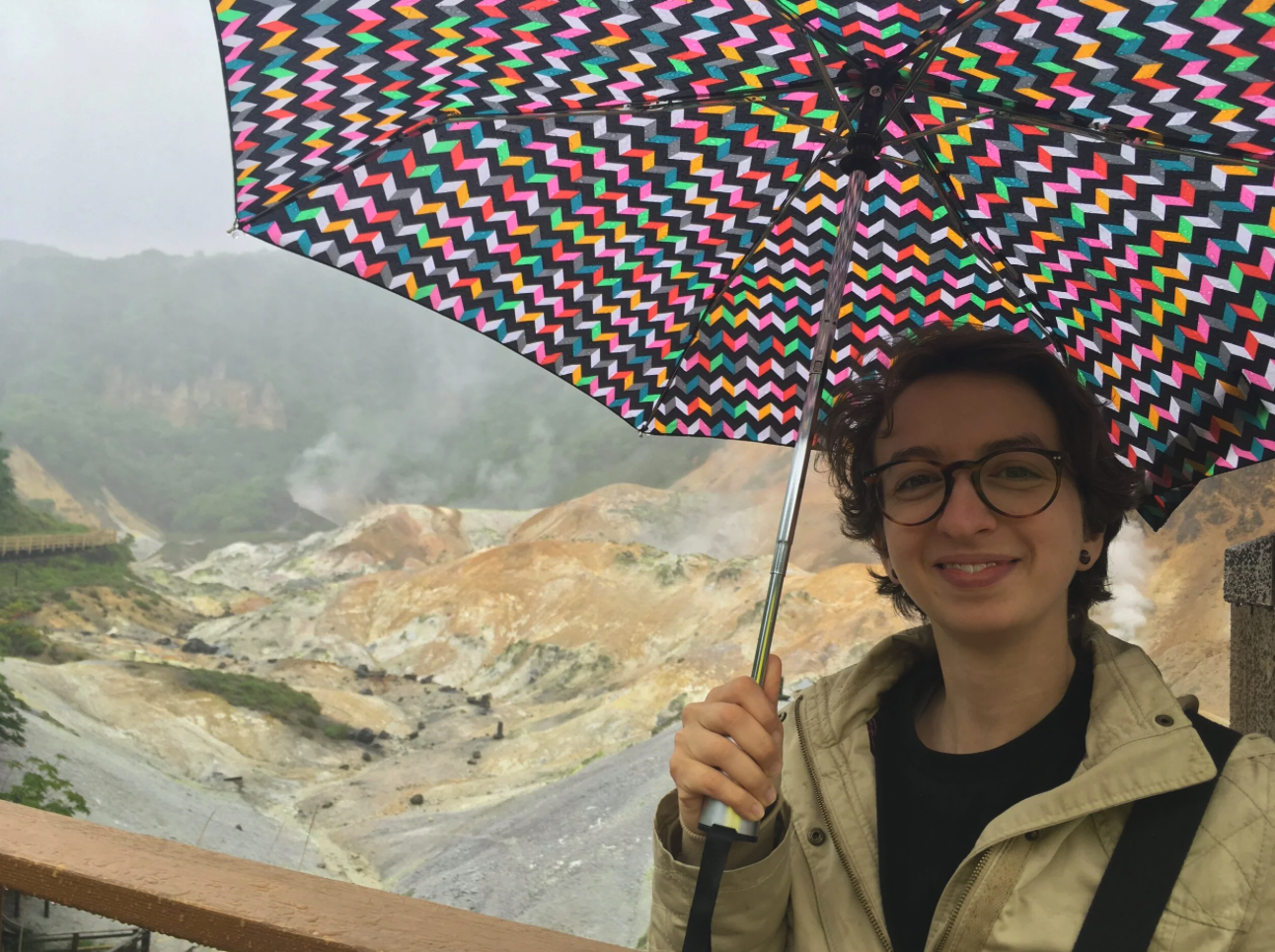
Caroline in Japan’s Jigokudani (地獄谷) or "Hell Valley"
Caroline, tell us a little about yourself and your research. Have you always had an interest in Japanese, and in foreign languages and cultures?
Starting this fall, I am a 2nd year PhD student at the University of Virginia. I am studying socio-cultural anthropology. My research is on the Ainu of Japan and how their experience intersects with the larger global indigenous rights movement. I am also hoping to explore how the Ainu us digital media is their activism and generally how they navigate an indigenous identity within a country that largely considers and presents itself to be ethnically homogenous.
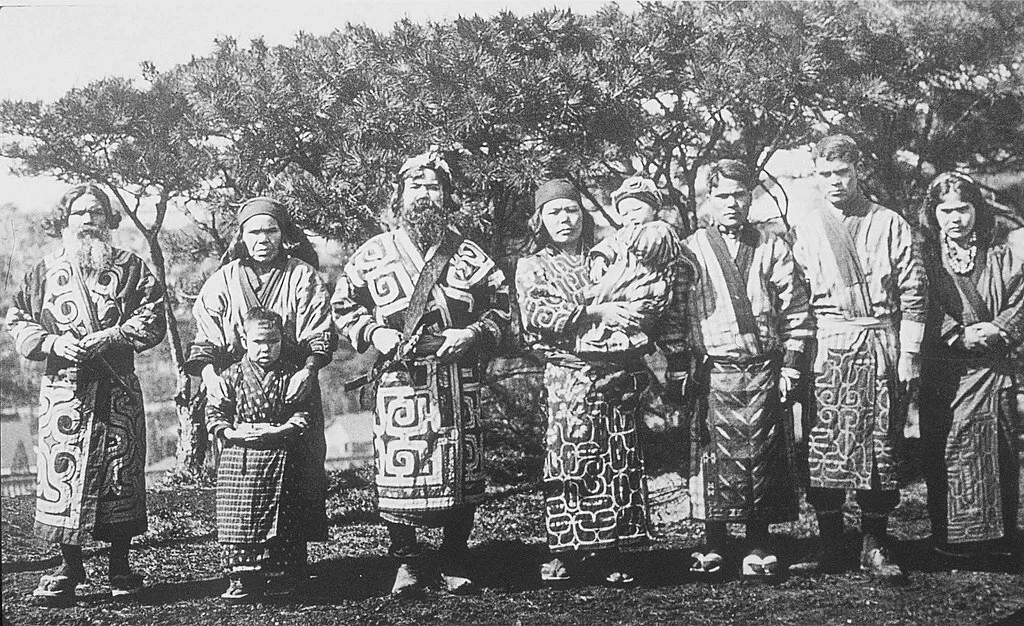
The Ainu of Japan
What motivated you to take an online immersion course in Japanese with Speak!?
I lived in Charlottesville before I became a grad student and had heard about Speak! by being in the community. So when travel restrictions prevented me from attending an immersion school in Japan this summer, I figured it would be good to support a local language school. I also hoped, if things got better, that we might be able to meet up in person for language classes. While that latter hope hasn't played out, it was still nice to have a teacher nearby so we could talk about local issues and concerns in my target language. Generally, in order to carry out my fieldwork in a few years, it is essential that I get better at Japanese. Taking lessons with Speak! has allowed me to practice and have some intensive language study even during these trying times.
What's it like taking so many hours in one day? How do you and Masako keep it varied ?
We meet for three hours a day, five days a week. It usually flies by. We mostly use the time to practice conversing. We start with new grammar points and textbook exercises everyday, but we leave space to let a conversation naturally take off. I have found this very rewarding since it really allows me to practice expressing myself and get more confident. In addition, Masako finds videos and interesting news articles that we watch/read together. She helps guide me through readings that are beyond my Japanese level but contain content relevant to my research. We even did a virtual cooking class together. It has been a couple weeks since our lessons ended and I really miss the daily fun we had together.
Is there an advantage to the one-on-one format? To online vs. in-person?
The big advantage to the one-on-one format is that I get all the attention (lol), so I get personalized help in figuring out what my common mistakes are and getting immediate feedback/corrections. Plus, since we're not worried about rushing through class or letting other students participate, I get the time to figure out how to express my more complex thoughts. While I would love to be having these classes in person (even in English, online communication feels harder), it being online does have its advantages. For one, I get to meet up with a fantastic teacher who lives a solid 2 (?) hours away. Second, it is a lot easier to share information and look up things when we can just share our screens. Many of our conversations have gone on tangents that require a little show and tell to better communicate or explain the cultural aspects to language learning.
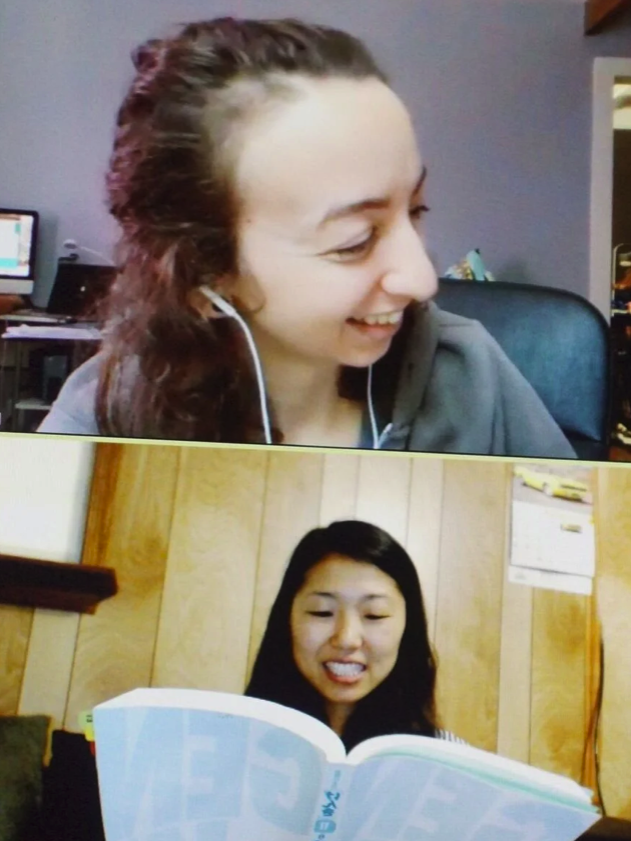
Silver Linings:
“The big advantage to the one-on-one format is that I get all the attention (lol), so I get personalized help in figuring out what my common mistakes are and getting immediate feedback/corrections…Masako is a great teacher and we have a lot of similar interests and experiences, so she is a joy to talk to. Since it has been so easy to converse with her, I have gotten a lot more confident at Japanese and in conversing through all the mistakes that I make. It has been very motivating at a time where it is very easy to feel unmotivated. ”
You've shared that learning Japanese with Masako this summer has been a sort of silver lining of the pandemic. Could you explain why?
Well, aside from the partner that I live with, she is the only other person I talk to on a regular basis. So it has been nice to have some regular socializing. More specifically, Masako is a great teacher and we have a lot of similar interests and experiences, so she is a joy to talk to. Since it had been so easy to converse with her, I have gotten a lot more confident at Japanese and in conversing through all the mistakes that I make. It has been very motivating at a time where it is very easy to feel unmotivated. This was supposed to be my first summer of preliminary fieldwork and language study - essential to getting my degree - and I was a little heartbroken about not being able to do that. However, now I had the opportunity to work with Masako and make a new friend. I am hoping we can remain in contact after the course is over and I would love to work with her in the future.
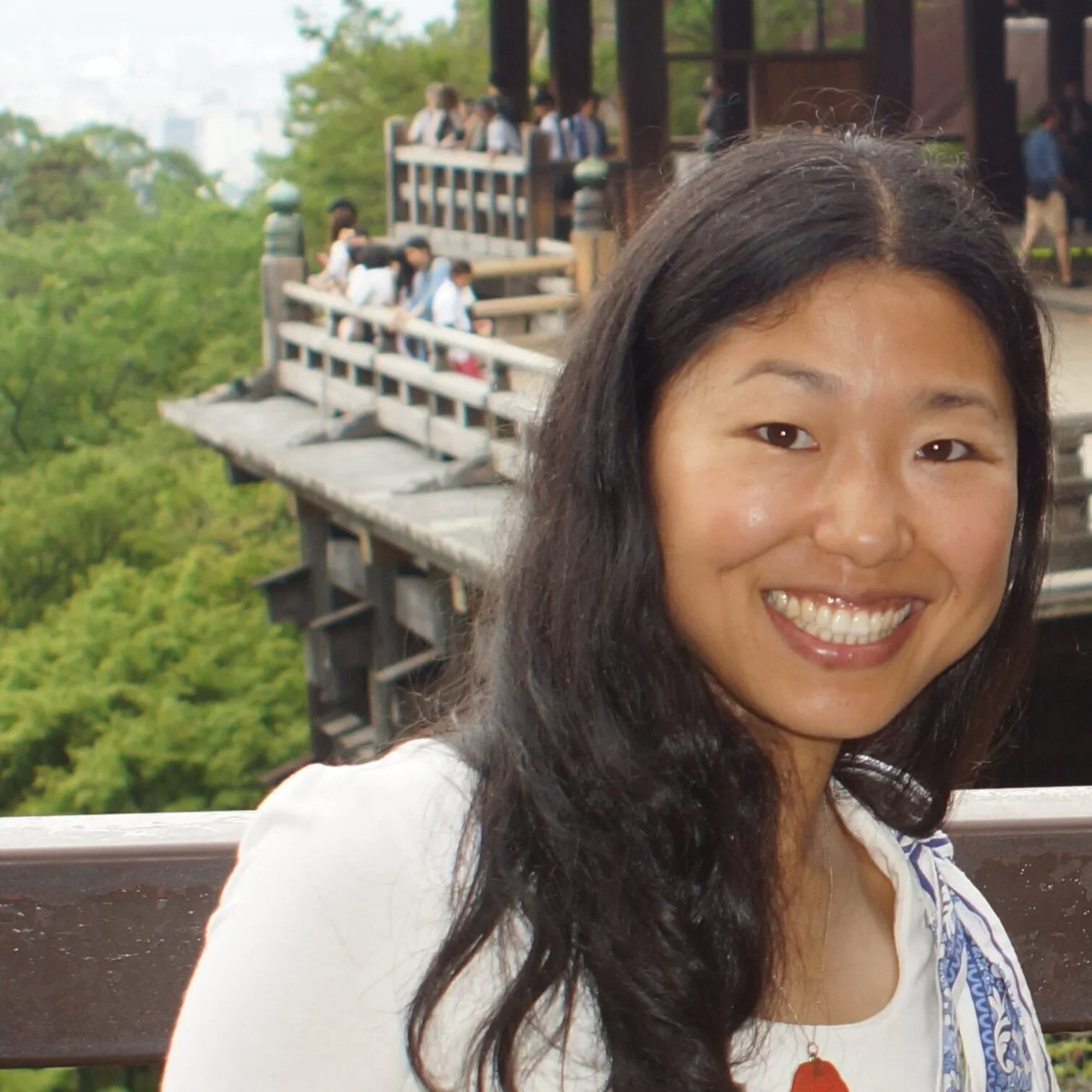
Japanese instructor, Masako, in her hometown of Kyoto
How will this course enhance your studies as we move into the next academic year?
I will be able to start doing more research in Japanese and looking at local resources. They are still a little above my level, but they are far more comprehensible now that I have a stronger foundation of grammar/kanji.
How has your Japanese improved thanks to this course?
I have definitely gotten more confident and comfortable at speaking Japanese which was my main goal over the summer. I will also be ahead in grammar and reading Kanji before starting my Japanese classes this fall.
What would you say to a friend who's considering an individual online course with Speak!?
I would definitely recommend Speak! to a friend if they want a personalized course. I was definitely a little nervous at first, but Speak! has been very accommodating to my needs during this weird time when a lot of the well-known summer Japanese language study programs were cancelled (CLS, Middlebury College, etc).
Also, if you're struggling to get your confidence up in a language it is definitely nice to have one-on-one instruction that lets you fail and learn in a small bubble.
Do you think you'll be able to travel to Japan in the near future? If so, how are you most envisioning using your new language skills?
I definitely hope so! I will be wanting to do more immersive language study there and use my abilities to make more connections with local Ainu activists, scholars, and artists. In general, I am looking forward to going back to Japan with better language skills and being able to strengthen old friendships and build new ones.
