
By Autumn Mozeliak
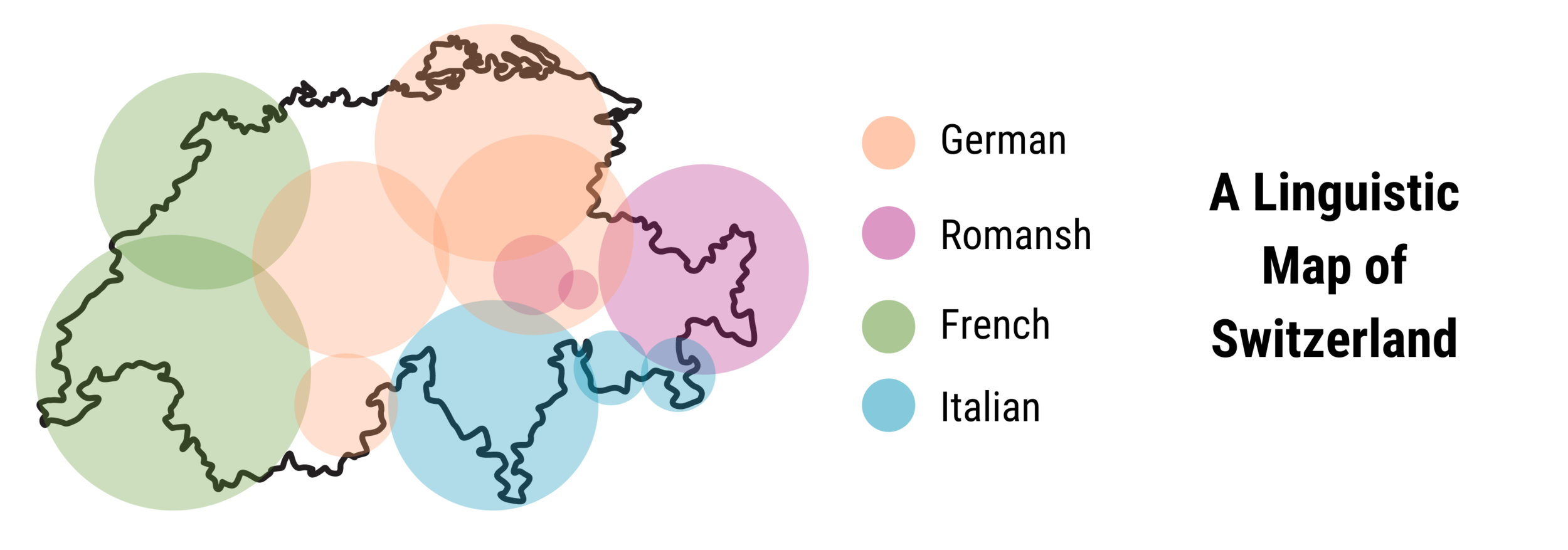
Switzerland. Home to cheese, the alps, and great chocolate. But what we may not think of: languages! Switzerland is home to many. It’s a melting pot, or as I like to say, a candy shop for fellow language enthusiasts. For such a small country, Switzerland is booming with plentiful languages, dialects and of course with these- cultures. With four national languages and almost uncountable dialects, Switzerland is full of linguistic diversity, but maybe a little difficult to communicate in. Let’s take a closer look!
German
Visiting Aargau, Basel, Lucerne, or Zürich? You might want to pick up some Swiss German! About 60% of Switzerland speaks German, approximately 58% speaking specifically the Swiss German dialects. What’s the difference? One major way you can tell if you’re reading Swiss German is if you don’t see any eszetts (ß). In place of this uniquely German character, the swiss simply use the double s (ss) in place of the eszett. Another difference is the lack of using words that start with ‘K’ and instead using ‘Ch’. Speaking of K’s, when we say day in Standard German, Tag, it sounds closer to ‘Tak’. However, in Swiss German, they don’t do this! Instead, the g is emphasized. To make it a little more tricky, this isn’t the case in all Swiss German. In Zürich, the capital, they more commonly use the Standard German pronunciation of Tag.
Unlike Standard German, Swiss German doesn’t use the -en ending of their infinitives and they instead drop the n. For example, machen (to do/to make) would go to mache. You’ll also be seeing lots of ‘li’s. Instead of the Standard German diminutives ‘-chen’ and ‘-lein’, Swiss German uses ‘-li’. For example, “Kätzchen” (kitten) becomes “Kätzli”.
Did you know? Many Swiss German speakers understand Standard German perfectly fine, but not the other way around!
The Swiss also have significantly shorter words. In addition to this, because there are so many other languages the dialects were bound to acquire some loan words- and they did! You can find a plethora of loanwords from both French and Italian. For example, Swiss German speakers use the French word for chicken ‘poulet’ instead of the German word for chicken, ‘hühnchen’.
It’s important to remember that even these Swiss German dialects are not always mutually intelligible. Generally, they are able to understand each other, although with some having dramatic differences in vocabulary words, these dialects can prove to be a little challenging, even to the Swiss!
Let’s learn some Swiss German!
English German Swiss German
Swiss German Schweizerdeutsch Schwizerdütsch
Hello Hallo Grüezi
Good bye Auf Wiedersehen Uf Widerluege
Thank you Vielen dank Merci vilmal
A little bit Ein bisschen S’bitzli
Romansh
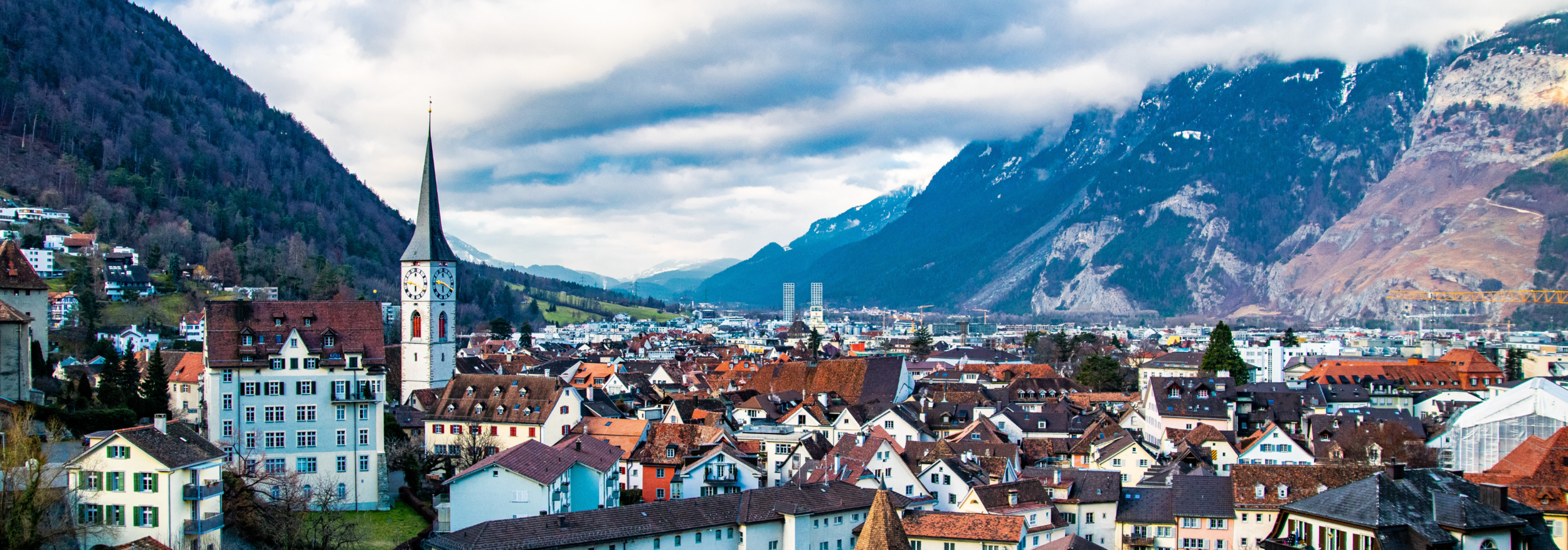
The Swiss canton of Graubünden is known for having a multitude of Romansh speakers. About 20% of the populace here speaks it, proving to be the region with the highest density of speakers of this unique and intriguing language. Many have never even heard of this curious language and understandably so- only about 5% of Switzerland in total speak it. So, here’s the run down:
Romansh, like one may be able to guess, is a romance language, first brought to Switzerland descendant from Vulgar Latin. The language is believed to have first originated in 15BC which may explain why it looks as archaic as it does. Did you think we were done talking about the hundreds of dialects in Switzerland? Romansh is actually an umbrella term used to cover its many dialects: Sursilvan, Sutsilvan, Surmiran, Putèr and Vallader. These are all regional variants of Romansh!
With centuries of German influence, naturally Romansh began acquiring a multitude of German factors and because it is also a romance language, other romance language speakers may be able to understand bits and pieces of the language. Despite this, Romansh is closest to Italian than any other language!
English Italian Romansh
Hello Ciao Ciao
How are you? Co vai? Come va?
Good Afternoon Buona sera Buna sera
Excuse me Perdono Perdunai
French
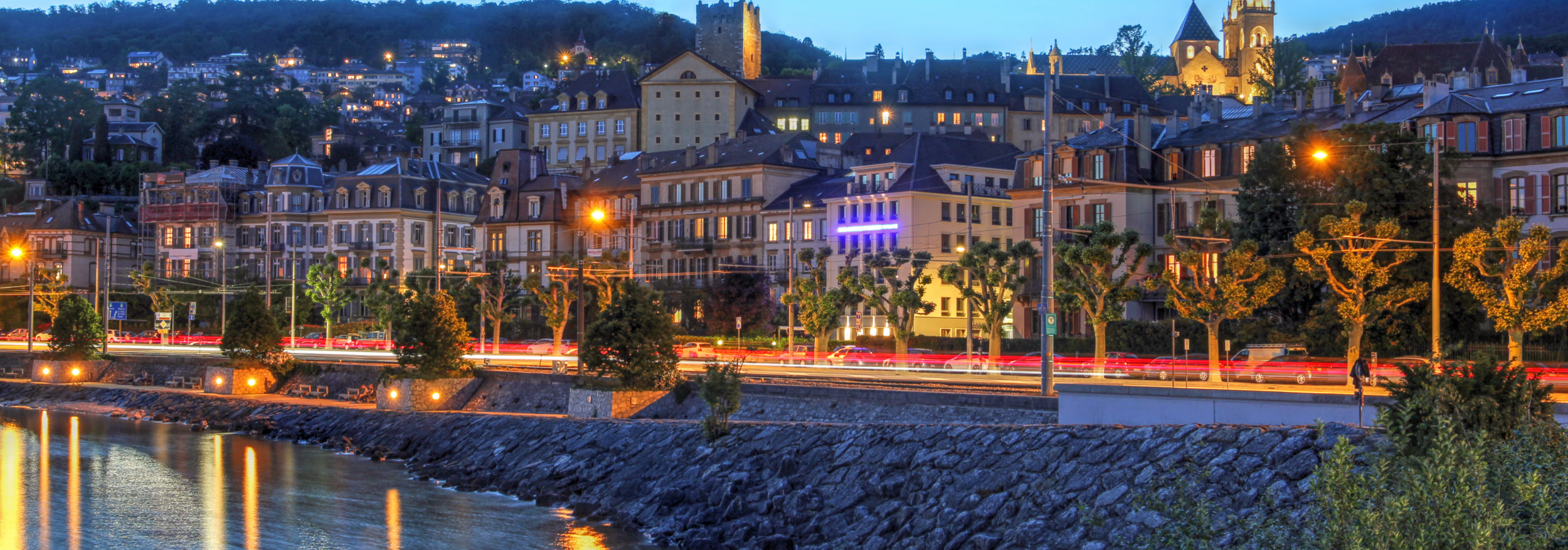
Visiting the beautiful cantons of Geneva, Jura, Neuchâtel or Vaud? These French speaking areas of Switzerland, known as the region of Suisse Romande and they are some of the most beautiful. With the booming city of Geneva, the breathtaking Neuchâtel castle and the cascading Jura mountains, they’re hard to resist! And if you speak standard French already, you’re in luck!
Today, the differences between Swiss French and standard French are very minimal and mostly lexical. Although of course in more rural sections such as Jura, there are some heavier lexical and phonological differences. For example, some areas of Swiss Jura have the Frainc-Comtou dialect which is spoken in the Franche-comté region of France!
However like all these Swiss languages, there are certainly some notable differences. For example, Swiss French follows suit with some other francophone countries’ version of numbers and meals. Here you can use septante, huitante and nonante for 70, 80 and 90, instead of the standard french soixante-dix, quatre-vingts and quatre-vingt-dix. When talking about meals, you can say déjeuner, dîner and souper for breakfast, lunch and dinner instead of the standard french version of petit-déjeuner, déjeuner and dîner.
Italian
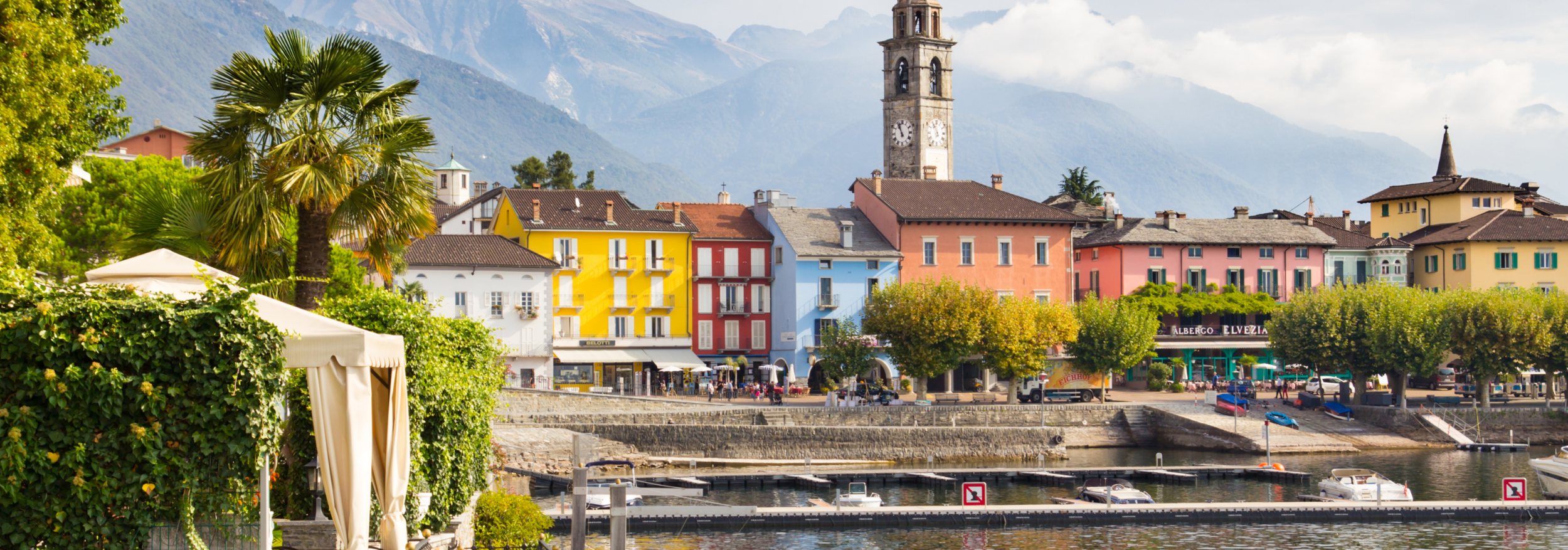
Last but not least, if you find yourself in the southernmost canton of Ticino, Switzerland, you will discover the beautiful language of Italian, but not just any Italian of course. Although Graubünden is also known to speak a significant amount of Italian in addition to Romansh, Ticino borders northern Italy itself and therefore it is the only official language in the whole canton. The entirety of the canton rests within a massive basin, hugged on both sides of the south end of the Swiss alps and the Italian border, giving it some beautiful views. While you’re in awe of the striking scenery, you may just get to use your Italian skills.
You guessed it: Of course there are some differences. The Swiss Italian accent of Ticino is strikingly similar to northern Italian Lombardy. In terms of vocabulary, like all the other official languages of Switzerland, there are a lot of loanwords incorporated into this version of Italian that, if spoken to an Italian, they may look at you funny. Swiss Italian has a lot French influence and we can see that clearly in some of their vocabulary. For example, driving license in Italy-Italian is ‘patente di guida’, but in Swiss Italian, it’s actually ‘licenza di condurre’, deriving from the standard French ‘permis de conduire.’ If you’re riding the bus, you would probably want to use the Italian word ‘autobus’ but you may want to use the Swiss Italian version ‘autopostale’ or ‘posta’. Here are a few other examples:
English Italian Swiss Italian
Promotion promozione promuovimento (from italian)
Easy facile evidente (from french)
Flu influenza grippe (from german)
To reserve prenotare riservare (from french’s reserver)
Going to Switzerland?
And need to brush up on your German, Italian or French to help you along? We teach all three! Schedule a consultation with us to find the perfect teacher for you! Our artisan teachers are here to help you along your travelling journeys, one language (and even one of many dialects) at a time to help you prepare for your trip!