
Student Spotlight: NICK
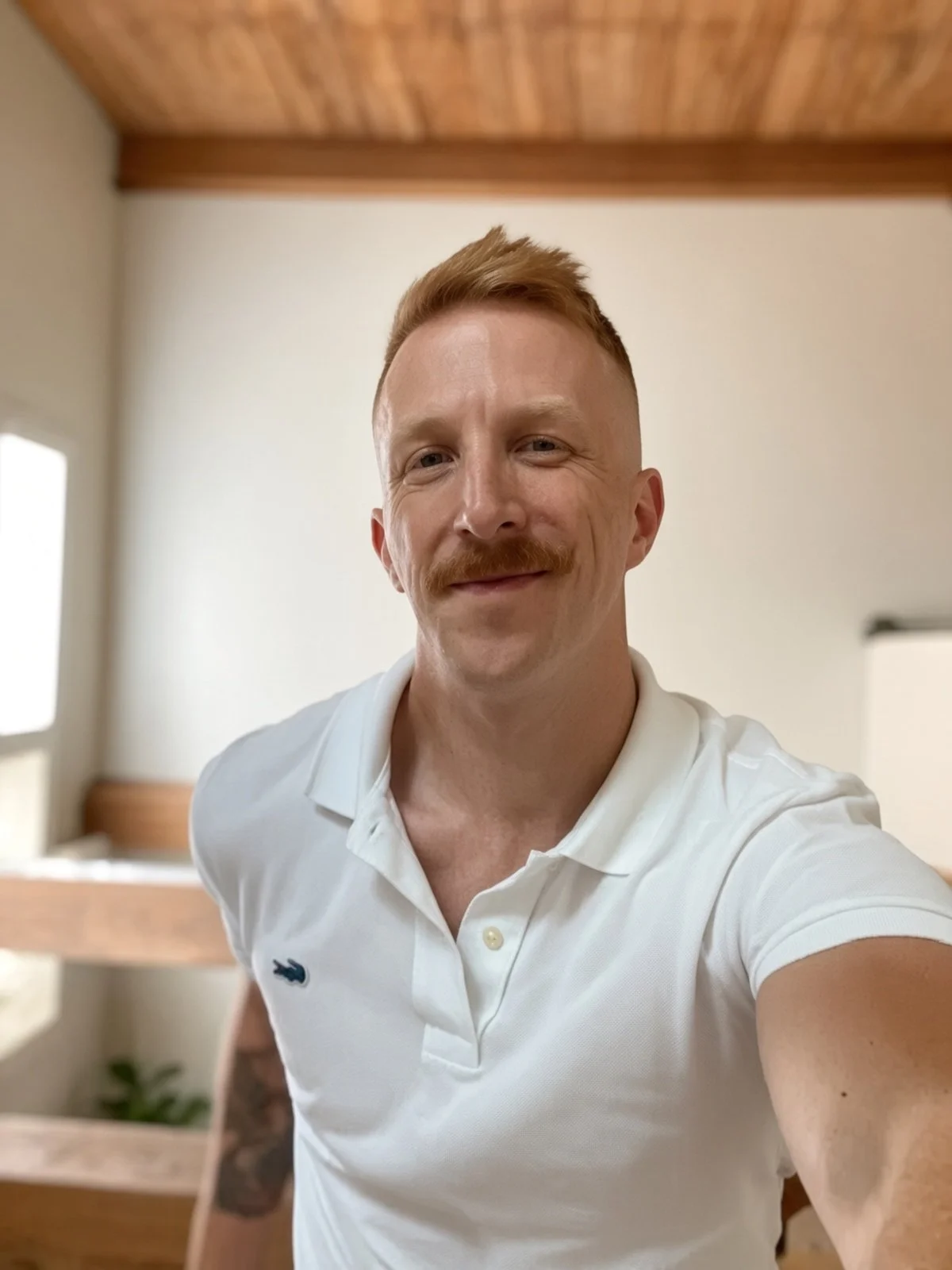
How has the pandemic shaped, or re-shaped your summer research and travel plans?
Originally, I was supposed to be in Spain this summer doing research for an upcoming project. Even though the EU ended up opening to American travelers, it didn’t happen in time for me to adequately plan my trip, so I just decided to defer to summer 2022. Given the (not exactly unexpected!) change in plans, I decided to spend the summer learning Portuguese, something I knew I was going to have to do, but that I wasn’t planning on doing for another year or so.
How did your knowledge of other Romance Languages (Spanish, French, Catalan) support your progress in Portuguese ?
Even though I studied (Brazilian) Portuguese for a semester back in 2011, I basically started European Portuguese as what second language acquisition experts call a “false beginner”: I recognized some things and very little vocabulary, but I couldn’t really string together any sentences aside from random ones that I had memorized. That being said, my knowledge of Spanish, French, and Catalan was a huge help. For example, I didn’t need to relearn certain concepts shared across Romance languages, like formal vs. informal registers, the subjunctive, gender, etc. Still, there were lots of things about Portuguese that surprised me. The pronunciation was particularly challenging, although my instructor Marta was super helpful on that front!
You described your course with Marta Afonso as a "perfect pairing." Tell us a bit about how the two of you worked together to create a course designed just for you, your research and your goals.
From the start, I knew that I wanted to work with an instructor that was fluent or had near-native proficiency in European Portuguese, which I thought would be a tall order given the prevalence/ubiquity of Brazilian Portuguese in the US. For my next book-length project, I plan to put the life and work of Eça de Queiroz—a contemporary of Zola and Tolstoy and considered by many to be Portugal’s greatest novelist—into dialogue with Spanish and Catalan artists and writers I continue to research and write about. With these interests in mind, I ideally wanted to work with an instructor who wasn’t just fluent in the culture and the language, but who was also knowledgeable about nineteenth-century Portuguese culture and literature, and who could take advantage of stuff I already knew from having spent most of my career studying/working in other Romance languages. Marta checked all those boxes! We of course did lots of activities that I’m sure she would do with any of her students (listening to authentic dialogues, grammar exercises, etc.), but she also helped me practice reading comprehension and literary analysis of nineteenth-century texts, including short realist fiction by Eça and his contemporaries. As part of a writing assignment, Marta even helped me draft an email that I plan to send to the Eça de Queiroz foundation to introduce myself, describe my research, and ask about their schedule for summer 2022. “Perfect pairing” is not an exaggeration!
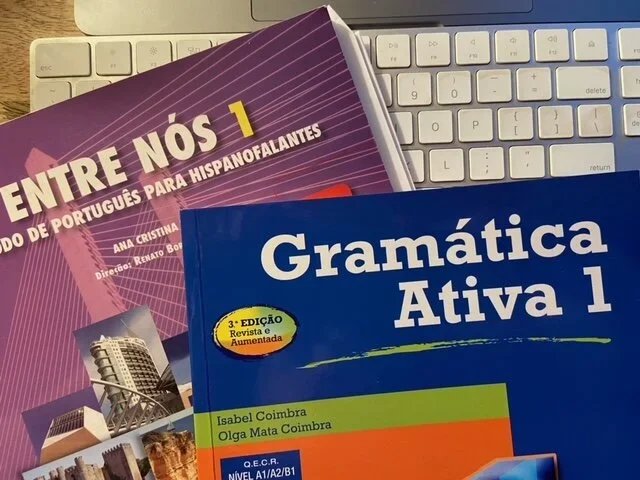
What did you enjoy most about working with Marta ? How would you describe her teaching style?
Marta was truly one of the best language instructors I’ve worked with. She had a knack for simplifying difficult concepts and illustrating her points with lots of examples culled from a variety of authentic sources (newspapers, music, videos, etc.), and she was also great about correcting my grammar and pronunciation without ever seeming overbearing—even though some amount of error correction is essential, that’s not an easy thing to do! What I liked most is that there were obviously some types of activities we would return to (dialogues, grammar exercises, etc.), but each class felt different and engaging. Marta would often assign very short paragraphs for me to write about a video or primary text that I would watch or read for homework, and those were always really fun to correct together during the synchronous session. Marta also would come up with ideas for class sessions as new things would come up. For example, I mentioned that I wasn’t too sure about vocabulary related to animals—which maybe unsurprisingly shows up a lot in nineteenth-century texts!—so one day we spent half of the class going over colloquial expressions and proverbs involving different animals.
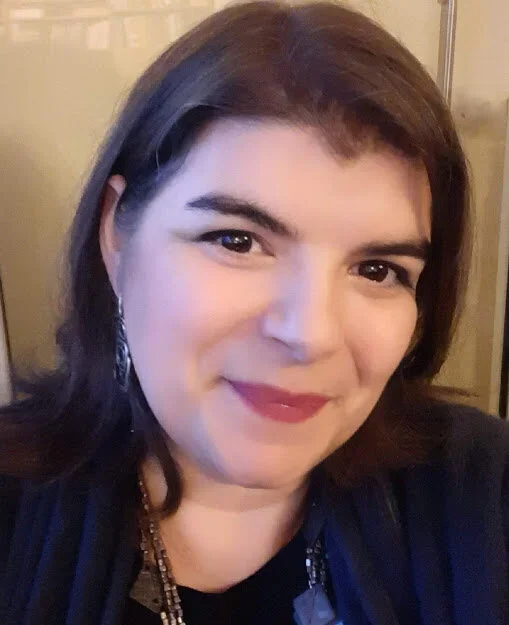
Marta Afonso, our (and Nick’s) European Portuguese teacher, living in Porto, Portugal
As a Spanish professor yourself, did you learn any new tricks from Marta or share some of your own with her?
I don’t often ask my students to write paragraph summaries of things they’re expected to watch or read (they end up doing most of their writing in the form of essays throughout the semester), but I actually feel like that would be a great informal homework (or even in-class) assignment. Summarizing a video about a Portuguese literary polemic or about a famous figure from Portugal’s history forced me to identify the main ideas of a text or video while also trying to incorporate recently-acquired vocabulary or grammatical structures. It would be neat to combine that with some kind of visual component, since students are very familiar with combining visual and textual content on social media platforms like Instagram and Twitter. I also loved the process of writing the email to the Eça de Queiroz Foundation, and even though I teach cultural studies and literature, it could be fun to ask students to write emails they might have to prepare while they’re studying abroad (for example, to their professor or to their host family, or to a librarian for a research project, etc.).
How would you describe your online Portuguese course in three words ?
Engaging, fun, and rewarding!
Anything else to add?
Muito obrigado, Marta e Christina! I hope to take what I’ve learned with me to Portugal in summer 2022!
